
Written by people who live here.
We have lived in Massouri since 1982. These are the questions guests ask most, answered without the brochure language.

Climbing Kalymnos from Ibiscus — a local's complete guide
Everything we have learned from thirty years of climbers on our balconies. Not a topo — Aris Theodoropoulos wrote that one. This is the logistics, the weather, and the stuff nobody tells you before you fly.
Read the guide
The climbing sectors you can walk to from Massouri
No car, no bus timetable, no parking on the Armeos road. From an Ibiscus villa you can be at the base of Grande Grotta before your coffee is cold. This is the walking-distance map of Kalymnos, sector by sector, with the shade hours our guests actually use.
Read the guide
The Kalymnos climbing calendar, month by month
Kalymnos climbs for most of the year, but not the same way every month. Here is how the twelve months actually feel on the rock above Massouri — from a family that watches the walls fill and empty every season.
Read the guide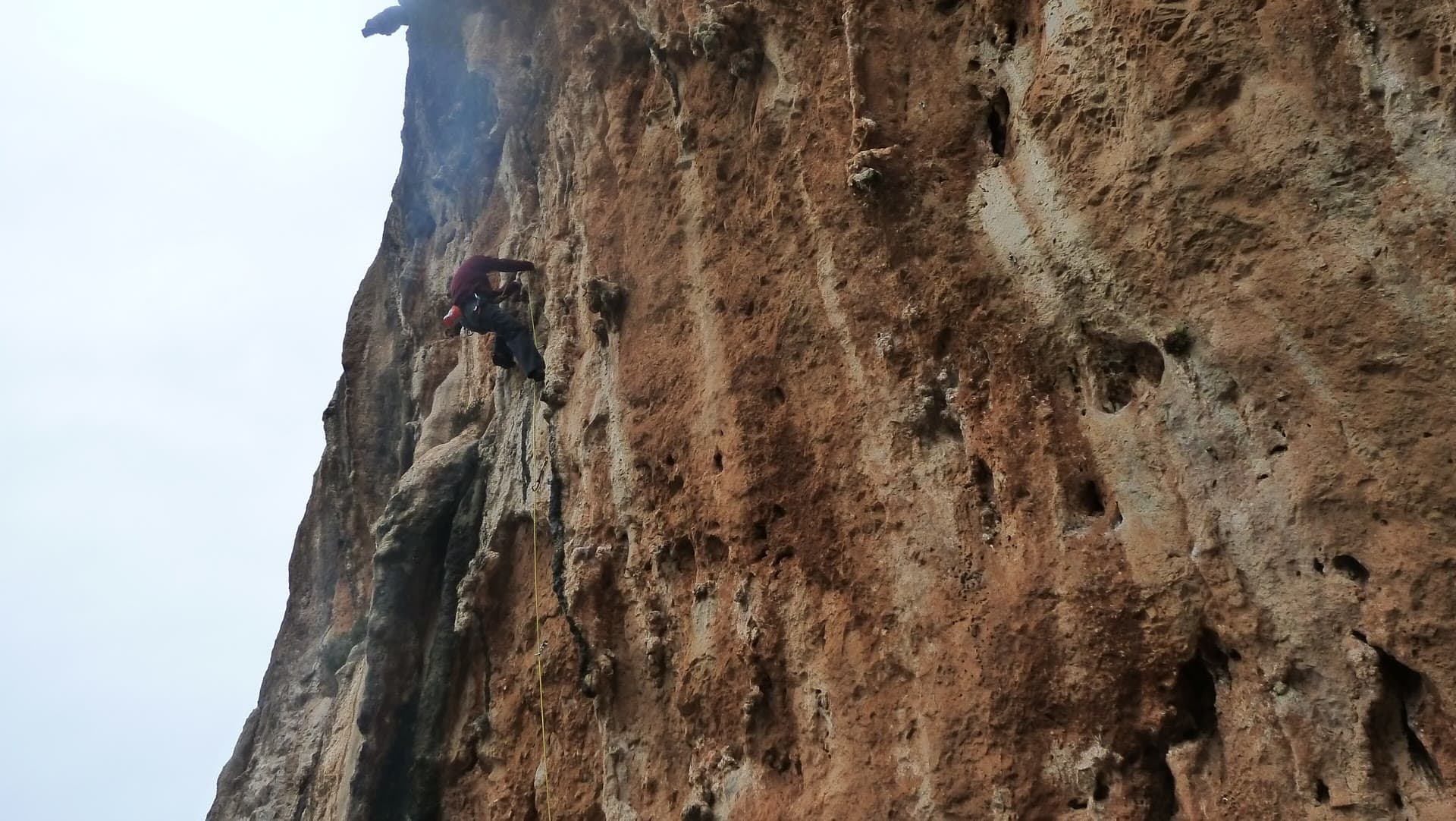
What to pack for a Kalymnos climbing trip
The island is a sport-climbing paradise with two well-stocked climbing shops, so you can afford to pack light — but a few things are worth carrying from home. Here is what our climbing guests wish they had known before checking a bag.
Read the guide
Getting to Kalymnos — every route, with actual times
Something repeat guests notice quickly: after your second crossing, the ferry crew know you. They wave. They remember which café in Mastichari you sat at. If you stay more than a week and come and go on the Mastichari boat, expect to be recognised by the time you leave. It is a very Kalymnian thing.
Read the guide
Massouri or Pothia — where should you stay?
Kalymnos has two real bases for visitors. Massouri (our village, on the climbing side) and Pothia (the port, on the administrative side). They are twenty minutes apart and have different purposes. We will tell you honestly which works for what.
Read the guide
What to do in Kalymnos off-season (and why it is underrated)
Between November and February the island empties out and a different Kalymnos appears. When the big tour operators withdrew in the 2010s, weekly visitor numbers fell from three thousand to a few hundred. That sounded like bad news. In practice it means winter is this: the island talking to itself, with you listening in.
Read the guide
Digital nomad Kalymnos 2026 — the complete guide
We have watched the slow-burn nomad crowd grow from five people in winter 2022 to around fifty in winter 2026. Some stay three weeks, some three months, a few have relocated. Here is what we have learned from the ones who stay — and the ones who do not.
Read the guide