

Two peaks and a long shoulder
The island has two proper climbing seasons — spring (March to May) and autumn (late September to November) — separated by a hot summer that still works on shaded rock and a mild winter that works on sunny days. October is the peak by a distance: every villa in Massouri is full, the tavernas are open late, and the Grotta has a queue. Spring gives you the same rock with half the people and lower prices. Choose by temperament as much as by weather.
Month by month
Temperatures are typical daytime highs in Massouri; the rock in the shade runs several degrees cooler. Rain is rare and short — Kalymnos limestone is climbable within an hour or two of a shower on the steeper sectors.
| Month | Daytime | Climbing | Notes |
|---|---|---|---|
| January | ≈ 13–15°C | Sunny days only, south-facing walls | Quietest month. Some tavernas closed. Short sessions, empty crags. |
| February | ≈ 13–15°C | Sunny days, sheltered sectors | Wildflowers start. Ferries on winter timetable. |
| March | ≈ 15–17°C | Full days, all sectors | Season opens. Cool rock, long days by the end of the month. |
| April | ≈ 18–20°C | Full days, all sectors | Spring peak. Everything open by Easter. Our favourite month. |
| May | ≈ 22–24°C | Full days; start using shade after lunch | Sea is swimmable. Still uncrowded. |
| June | ≈ 27–29°C | Mornings and shaded sectors | First hot weeks. Grande Grotta, Odyssey, Jurassic Park. |
| July | ≈ 30–32°C | Early morning and after 5pm, shade only | Meltemi wind on exposed walls. Swim between sessions. |
| August | ≈ 30–32°C | Early morning and after 5pm, shade only | Hottest month. Climbing is a discipline. |
| September | ≈ 27–29°C | Full days from mid-month | Season restarts. Sea is warmest. Book ahead. |
| October | ≈ 23–25°C | Full days, all sectors | The classic month. Book four months ahead. Festival, if held, usually falls here. |
| November | ≈ 18–20°C | Full days, occasional rain day | Second-best month. Crowds thin after the first week. |
| December | ≈ 15–17°C | Sunny days, south-facing walls | Winter sun. Nobody else here. |
Spring — March to May
The island wakes up in March. The hillsides are green, the approaches smell of thyme, and the rock is cold enough to climb hard at noon. By mid-April every taverna in Massouri is open and the sea is warm enough for the brave. Spring is the choice of climbers who have done October once and want the same walls with room to breathe: lower prices, easier bookings, no queue under the Grotta. The only caveat is the occasional wet week in March — and even then the caves stay dry.

Summer — June to August
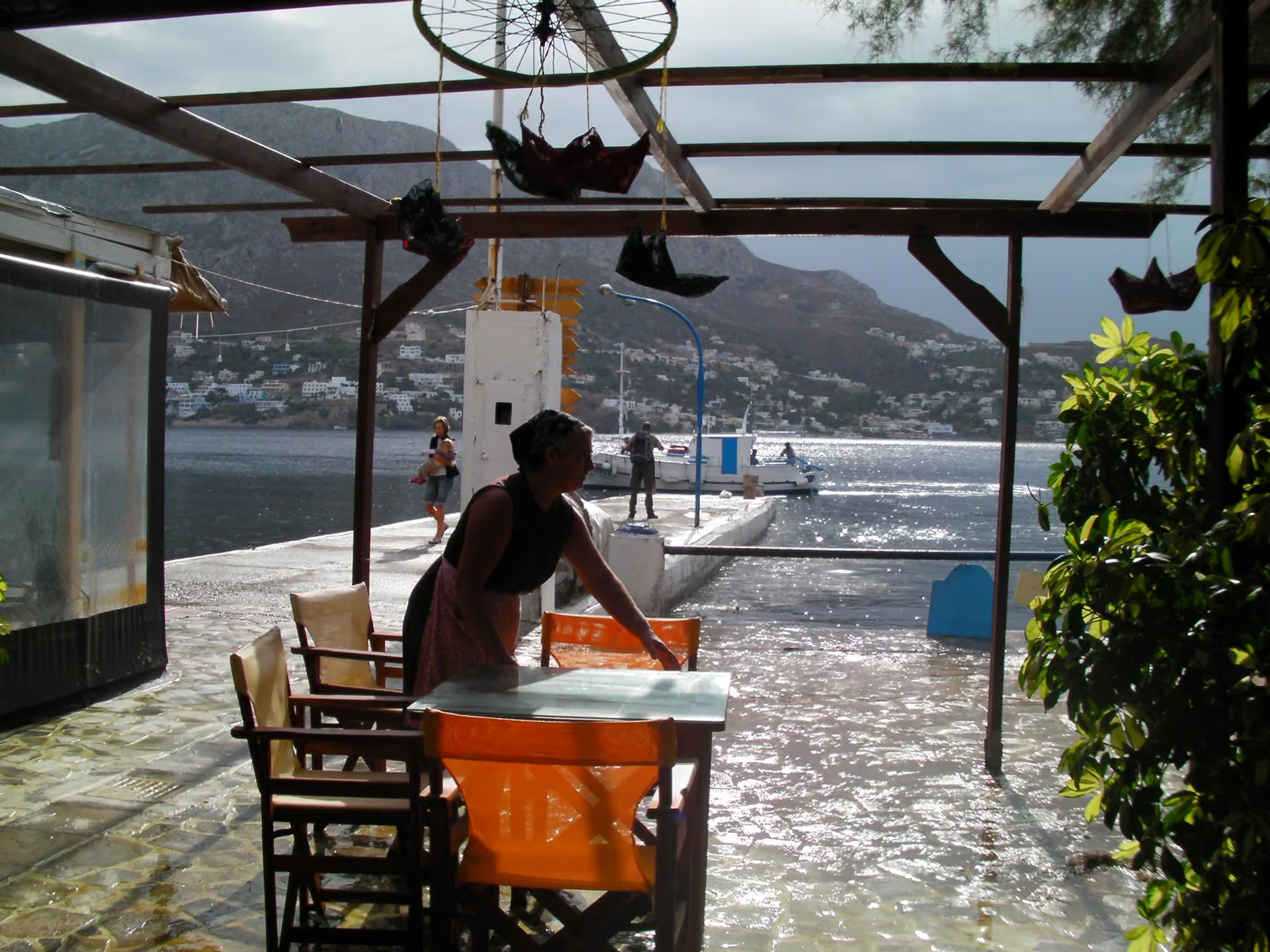
Honest answer: it is hot. From mid-June the rule is climb at seven, swim at eleven, sleep, climb at five. Only the shaded sectors work — Grande Grotta, Odyssey, Jurassic Park, the caves — and the meltemi wind can make the exposed walls unpleasant for days. In return, the village is a beach resort with a crag attached, families are here, the water is perfect and the villas are at their cheapest. Bring a headlamp for the walk down at dusk.
Autumn — September to November
This is the Kalymnos of the magazines. Late September the heat breaks, the sea is still warm from summer, and by October it is twenty-two degrees with short shadows and no rain for weeks. Every European climbing club seems to be in Massouri at once. If you want October, book by June — our villas are usually full four months out. November is the insider's month: the same conditions, the crowds gone after the first week, the occasional day of rain that gives you an excuse to take the boat to Telendos.

Winter — December to February
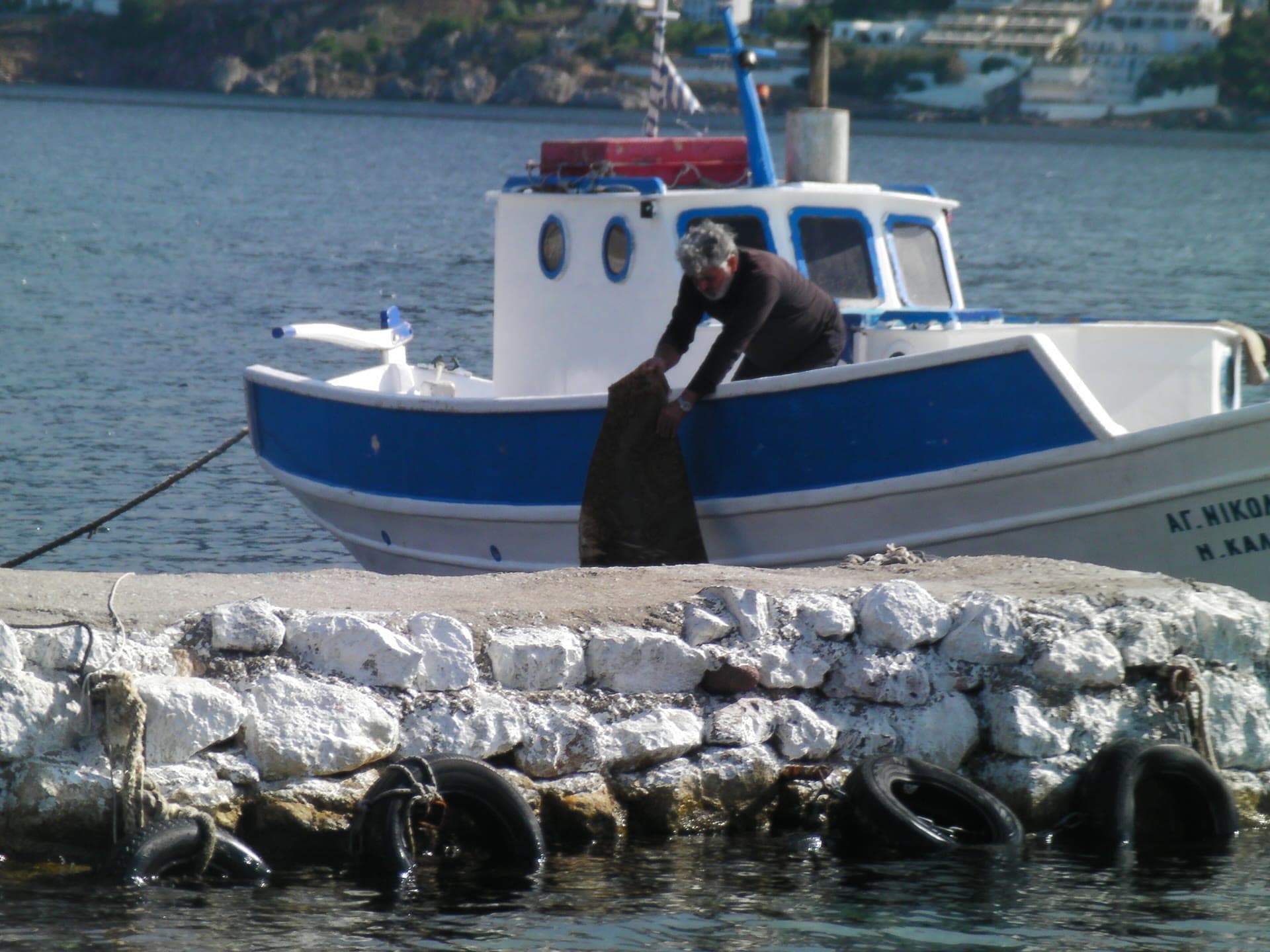
Kalymnos does not close, it just gets quiet. On a sunny day the south-facing walls are warm enough to climb in a T-shirt; on a grey day you read on the balcony and eat. Sessions are shorter, the light goes by five, and some tavernas shut until spring — but the ones that stay open are the ones the locals use. It suits climbers who work remotely and want a month of rock without a calendar. Ask us about winter long stays.
The climbing festival
Kalymnos has hosted an international climbing festival on and off since the early 2000s, usually in autumn, with clinics, new-route openings and evening events in Massouri. Editions are announced by the municipality and sponsors year by year rather than on a fixed date, so check the official announcement before planning a trip around it — and if it is on, book accommodation the day you read the announcement. The village sells out.
When to book what
October: book by June. Late September and November: by August. Spring: two months ahead is comfortable, a month is usually fine. Summer and winter: the week before is often enough. Long stays (a week or more) are welcome in every month and are how most of our climbing guests book; a month in Massouri in November or March is a different trip from a weekend.
Check dates for your season
Live availability for all fourteen villas and a human reply from Massouri.
Check availability